For the Love of Kanji

Jackson Singleton
software dev && language nerd
Context: I’m a new learner to Japanese, and these are the observations I have made. This is part brain dump and part research. I was curious about the use of a logographic script in a language that contains two other scripts that are phonetic. I hope you enjoy the read.
Starting my dive into Japanese towards the end of last year has been such a great experience. Japanese will be my fifth language and the first non-European language that I will have studied to a reasonable depth. Japanese is unique, beautiful, and conceptually different from the languages I’ve grown accustomed to. Even core ideas such as tense, subjects, and conjugations fall apart when applied with a Euro-centric mindset. However, like every other language I’ve learned, I’ve found that new learners love sensationalizing a few initially foreign concepts upon which they entirely hinge the difficulty of learning said language. As purely anecdotal evidence,
- Spanish → Ser y Estar
- French → 97
- German → Komposita
Last but not least, Japanese Kanji.

Der Handschuh in German = Hand Shoes, aka Gloves is an example of the Komposita at work. Source: Unsplash
Problems with Learning Japanese?
To clarify, Kanji is significantly more difficult to understand than using two verbs, a few funny numbers, or conjoined words. I find that Japanese is in an interesting position for American language learners as it can be really… useless. I will never argue against education for the sake of education; however, if one (American English speaker) takes a utilitarian approach to language learning, then Japanese has no room on the podium against languages like Spanish, Arabic, and Mandarin. Japanese has an immense draw to worldwide learners due to the nation’s enormous cultural impact. Over the past 50 years, Japan has taken the world by storm with anime, video games, toys, Godzilla, and other cultural cornerstones to which many hold strong emotional bonds. With these bonds often comes a desire to deepen cultural understanding through sharing the language.
Yet another anecdote: This may be a strong catalyst, but I have yet to meet anyone who has successfully learned a language to consume media. Please prove me wrong.

Gundam is one of many examples of the Japanese post-war entertainment powerhouse Source: Unsplash
The romanticization of Japanese culture and the path one undergoes to learn the language for the sole purpose of, *ahem*, watching anime without subtitles, often leads directly to Mount Stupid.
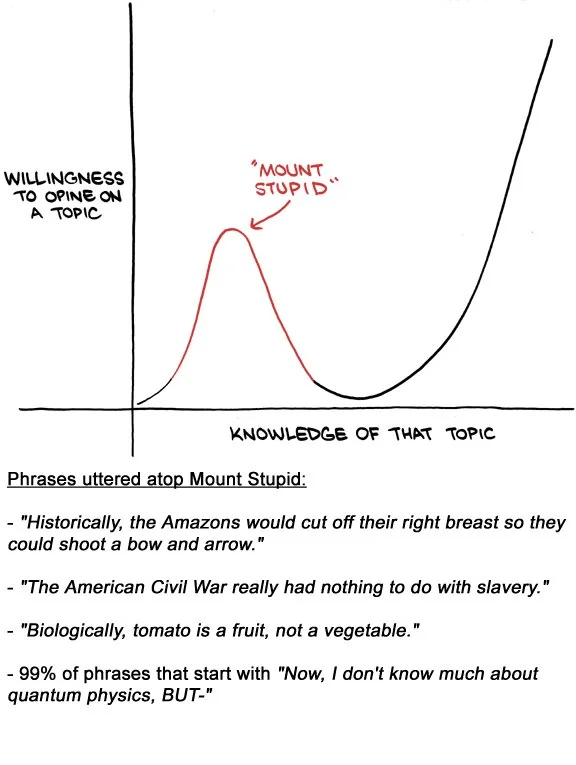

While I have summited Mount Stupid many times and will undoubtedly make the trek once again very soon, making it through the trough that follows is, by far, the most challenging phase of learning a new skill or truly attaining a new pillar of topical knowledge. You once felt that you had a strong understanding of something, and by actually getting better, you feel worse?
For Japanese learners, I’ve found the downward path forward from Mount Stupid marked with the introduction of Kanji.
漢字 - What the Hell is Even That?
If you’re not familiar with the Japanese language, characters like 漢字, 本 or 私 may just look like what you would expect Japanese to look like. And you would be absolutely correct. Over 40% of written Japanese is in Kanji(Chikamatsu, et al., 2000)1. The remaining 60% of written characters is generally comprised of the two other writing systems; hiragana and katakana. Hiragana and Katakana are more similar to the phonetic latin alphabet that we’ve become accustomed to as English speakers. In English, we assign sounds to letters, though, they aren’t always pronounced. In Japanese, their scripts are considered syllabaries. In a syllabary, each character is assigned, you guessed it, to a phonetic syllable. For example the character ち makes the sounds “chi” and will almost always make that sound when read: にち is read as nichi.
Hiragana and Katakana are two scripts that represent the same sounds
(あ(hiragana) = ア(katakana) = A(English ah, as in father))
But they are used in different contexts. Hiragana usually represents words with Japonic origins, while Katakana will often represent loan words from English or other languages
Example of Katakana: アメリカ translates to America and reads as Ah-Meh-Ree-Kah
Great.
So we understand that Japanese has three scripts, but that still doesn’t explain what Kanji is, does, or why new learners struggle with it. By the simplest definition, kanji are logographic characters that come from traditional Chinese. The original name “Hanzi” translates to “chinese character.” With that, we can classify the Kanji. There are simple logographs, which are essentially simple drawings. Person? 人 The number 1? 一 2? 二 3? 三(It immediately falls apart with four [四], don’t get your hopes up). Then there are kanji that represent simple but abstract concepts, such as concave 凹 and convex 凸. Finally, there are a few different types of compound and phonetic kanji that we’ll save for another day.
Something you may have noticed about Kanji, as opposed to the other scripts we discussed, is that are no directly associated sounds†. While kanji can have associated readings and sounds on an individual basis, those may change on context, and still rely on some level of rote memorization. How much rote memorization? Well, MEXTdefines what we call the jōyō kanji(常用漢字), which is a list of 2,136 characters that defines the baseline for literacy. Japanese children spend their first nine years of education learning these characters, and have the advantage of, well… living in Japan.
† There are plenty of cases of associated sounds for Kanji, however, there may be more than one and there isn’t a guaranteed 1:1 correlation of a Kanji character to a sound. This is not the case for Hiragana and Katakana, almost always will か sound like kah.
好きですか - What’s Good About Kanji?
For Japanese people, I could presume that there is cultural significance and historical bias baked in to the continuation of the use of Kanji. However, I love Kanji as it allows every character to tell a story, show some etymology or be understood in context. With a baseline understanding of many kanji you can use context, the use of radicals, and compounds of entire Kanji to help drive the meaning of the character.
An example I personally love is the kanji 月, which can be read as moon(tsuki) or month(gatsu), and is even used in the word Monday, 月曜日(getsuyoobi). I find that in just a few use cases, we can see so much about the utility of Kanji and how the language could have historically exchanged paths with Indo-European languages that also refer to the second day of the week as “Moon Day”. Even in English, we also get Moon, Month and Monday from the same root.
This example is lovely, but only paints the picture for a single Kanji. As mentioned earlier, we can compound Kanji radicals to convey even more ideas. A really straightforward example of this, uses the Kanji 日, which means sun or day.昌 is two 日 on top of each other and translates to prosperous. Finally 晶 is three 日, which can translate to “brilliant” or “sparkle.” While these example characters may not be commonly used, they are used to teach and understand the ideographic compounds that Kanji can create.
The Simple & Honest Answer
Finally, outside of the beauty and character(yes, pun intended) of Kanji. Readability. As I said earlier, Kanji aren’t always phonetic and will have different ways to be read. That being said, once you start to accept the understanding that Japanese is implicitly high-context, not understanding Kanji is no different than reading archaic words in the Classics in English, we will skip or misunderstand words, but can gather meanings purely on context. As you continue to learn and understand more Kanji and attain pattern recognition around said characters, being able to quickly read something like 私の鍵, instead of わたしのかぎ, is significantly easier. Even in English, the fastest and most comprehensive readers are considered visual readers(Lobier, et al., 2013)2 , Kanji naturally lends itself to visual reading as you aren’t likely to subvocalize non-phonetic characters, and has been shown to be strongly correlated with visual reading abilities(Nakagawa, 1994)3.
どうやって - How Do I Start?
You may have found yourself trying to learn Japanese in the past, and when you couldn’t distinguish between 明 and 朋 no matter how many times it popped up in your flashcards, that was it. Thankfully there are two popular and strong paths for studying Kanji right now.
1. Remembering the Kanji - Heisig
James W. Heisig’s “Remembering the Kanji,” or RTK, is a series of high acclaim. It focuses on utilizing our visual memory, pattern recognition, and mnemonic devices to build out a foundational approach to kanji. It is slow, tedious, but extremely effective. As Kanji are built up of radicals, we can fundamentally build out more and more Kanji and simplify our memorization tactics with radical recognition.
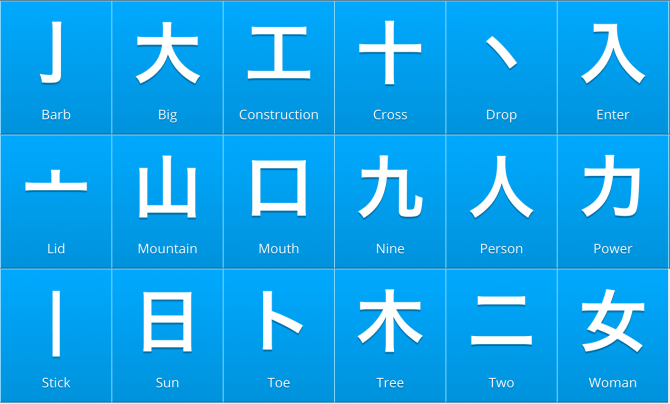
Kanji Radicals, Source: Fulton County Library System
2. WaniKani/Anki
2a. WaniKani
WaniKani utilizes FSRS algorithms in combination of some of the principles that Heisig discusses in RTK to ensure that you build Kanji into your long term memory. FSRS is optimized and driven from the approach of spaced repetition which shows evidence that you will better remember something if you review it just before it becomes forgotten. Over a series of repetitions, you will have nearly completely internalized the piece of information you sought to remember.
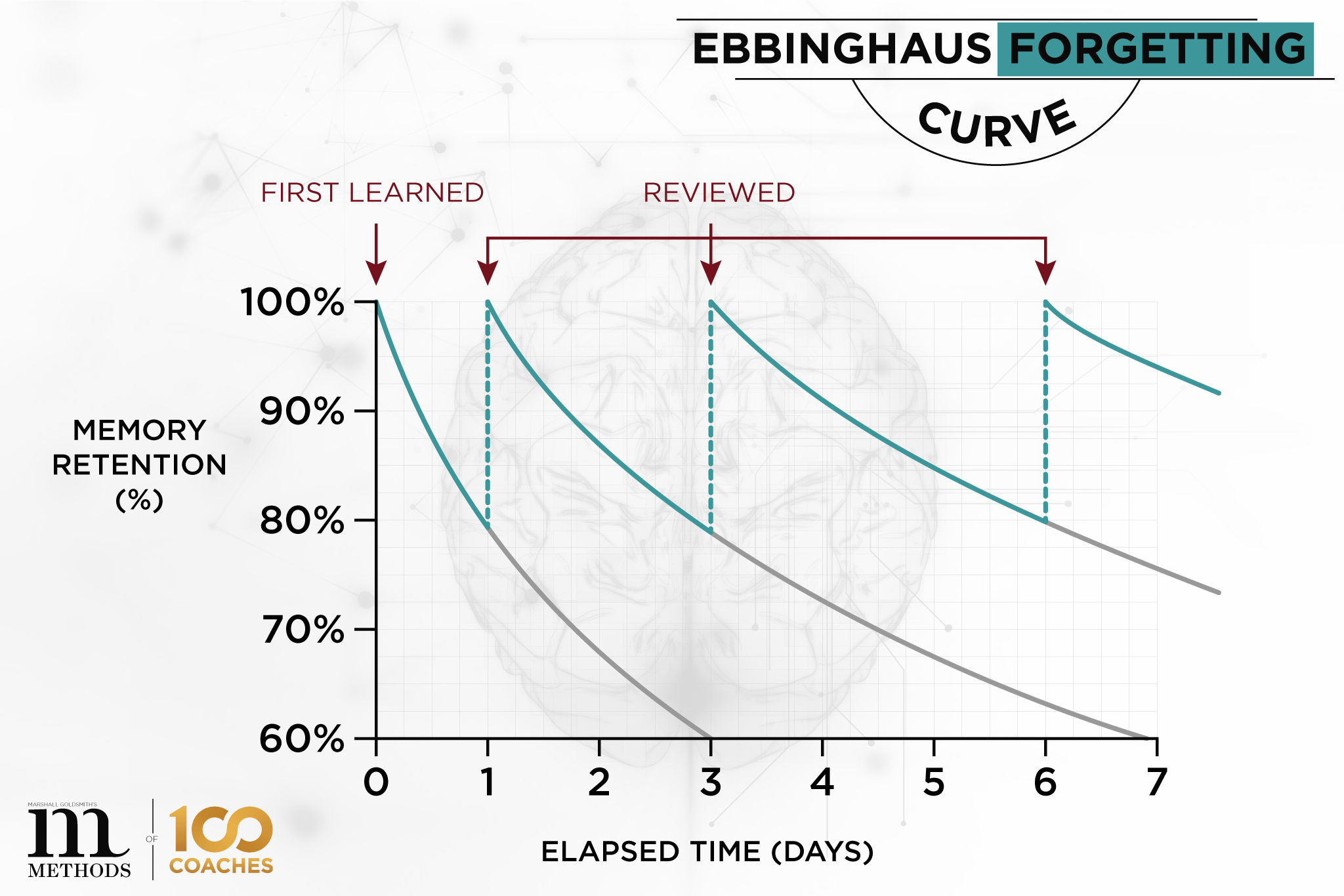
“The Forgetting Curve” Source: Marshall Goldsmith
2b. Anki
If you’re already using Anki for your studies, you can follow along with the RTK book by using the RTK ordered deck for FSRS benefits.
Another option is to use an RRTK deck instead of WaniKani, it’s completely free and uses FSRS + Recognition to get you to comprehend 1000 popular Kanji quickly.
Finally, if you like the WaniKani methodology, but prefer having your Anki reviews centralized. The full WaniKani ordered deck is available as well.
Conclusion
Take the time to learn Kanji. If you’re learning Japanese, don’t delay the study and recognition of Kanji. Practice reading with furigana, and start recognizing Kanji as soon as possible. If you’re not learning Japanese, thank you for reading anywho, if you ever decide to learn, best of luck :)
If you are Japanese or speak at a high level, feel free to tear this to shreds as I am at the peak of Mount Stupid currently and very much enjoying my child-like understanding of Kanji.🙂
Sources
Footnotes
-
Chikamatsu, Nobuko, et al. “A Japanese Logographic Character Frequency List for Cognitive Science Research.” Behavior Research Methods, Instruments, & Computers, vol. 32, no. 3, Sept. 2000, pp. 482–500. Springer Link, https://doi.org/10.3758/BF03200819. ↩
-
Lobier, Muriel, et al. “The Role of Visual Processing Speed in Reading Speed Development.” PLoS ONE, vol. 8, no. 4, Apr. 2013, p. e58097. PubMed Central, https://doi.org/10.1371/journal.pone.0058097. ↩
-
Nakagawa, A. “Visual and Semantic Processing in Reading Kanji.” Journal of Experimental Psychology. Human Perception and Performance, vol. 20, no. 4, Aug. 1994, pp. 864–75. PubMed, https://doi.org/10.1037//0096-1523.20.4.864. ↩